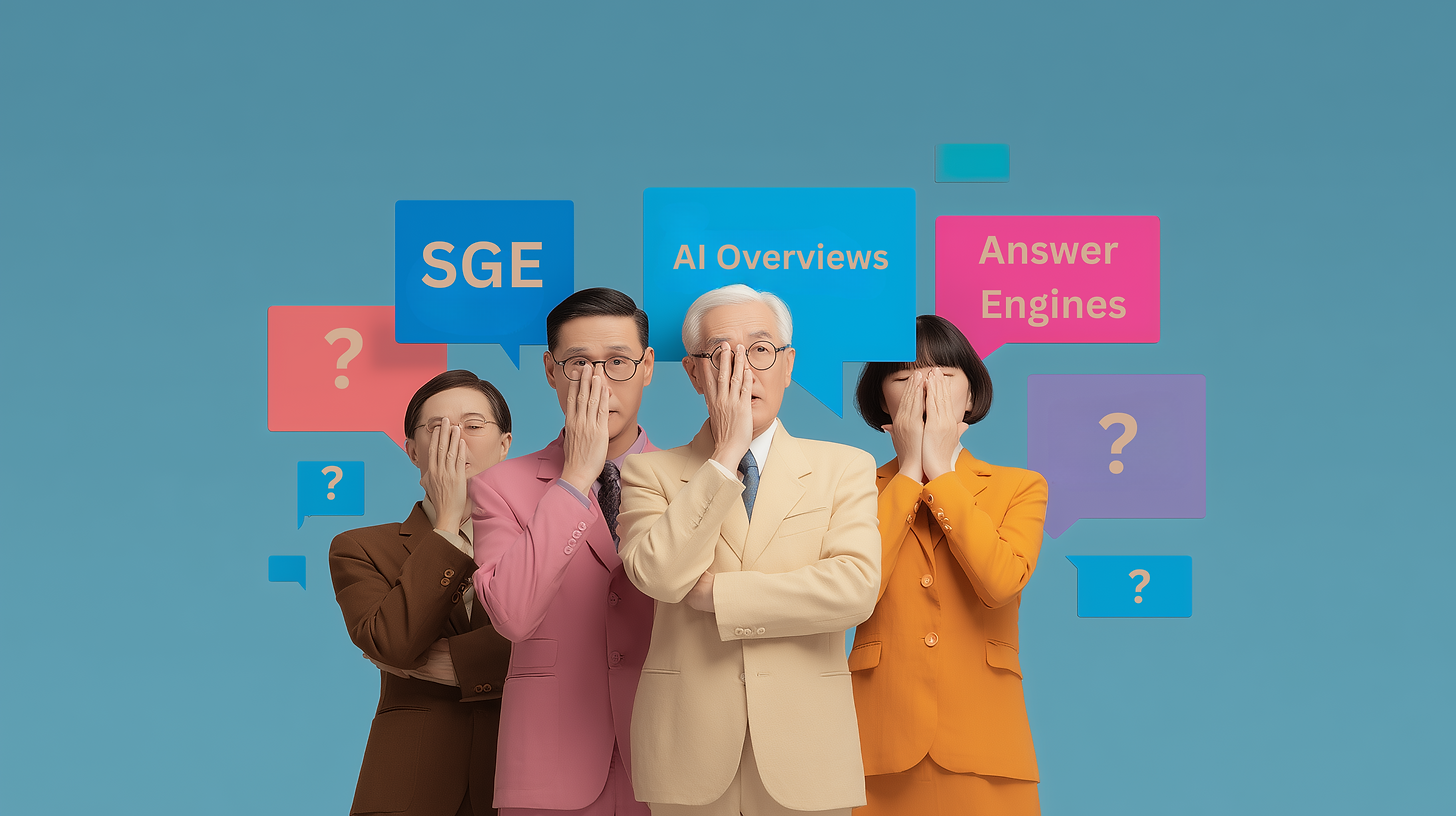
The world of online search is buzzing with new terms like SGE, AI Overviews, and Answer Engines. If you're wondering what these mean and how they're changing the way we find information, this explainer is for you.
What are AI Overviews (Formerly SGE)?
"AI Overviews" is Google's term for its integration of generative AI directly into the main search results page. This feature was initially known as SGE, which stands for Search Generative Experience.
- How they work: Instead of just seeing a list of blue links, you'll often find an AI-generated summary or "overview" at the top of the results for many queries. This overview aims to provide a direct, synthesized answer to your question by pulling information from multiple web sources.
- Example: If you search "what are the best strategies for eco-friendly gardening in a small space?", an AI Overview might give you a summarized list of techniques, tips, and considerations, all without you needing to click on individual websites initially.
- Conversational Follow-ups: A key aspect of AI Overviews is the ability to ask follow-up questions in a natural, conversational way, allowing you to explore topics more deeply directly within the search interface.
- Powered by Gemini: Google's advanced AI models, known as Gemini, are the engine behind these AI Overviews. Gemini can understand and process various types of information (text, images, video, code) to generate these comprehensive responses.
What are Answer Engines?
The concept of an "answer engine" represents a fundamental shift from the traditional "search engine" model.
- Traditional Search Engines: Historically, search engines like Google aimed to provide a list of links to web pages that might contain the answer to your query. You, the user, then had to click through these links and synthesize the information yourself.
- Answer Engines: In contrast, answer engines aim to deliver a direct, concise, and synthesized answer to your query directly within their interface. The goal is to provide the information you need immediately, reducing the need to sift through multiple sources.
- Examples: Google's AI Overviews function like an answer engine. Other platforms, such as Perplexity AI, explicitly position themselves as "answer engines," focusing on providing direct answers with clear citations to their sources.
The Underlying Technology: Generative AI Search
The ability for search tools to provide these direct answers and summaries comes from "Generative AI Search."
- Generative AI: These are AI models, primarily Large Language Models (LLMs), capable of creating new content (text, images, etc.) rather than just analyzing existing data.
- Generative AI Search: This refers to the integration of these generative AI models with search and information retrieval systems. Instead of just finding and ranking existing documents, generative AI search can create new content—like summaries, explanations, or direct answers—synthesized from the information it finds across the web.
Why This New Language Matters:
Understanding terms like AI Overviews, SGE, and answer engines is crucial because they represent a significant change in how information is accessed and delivered online.
- For Users: Search is becoming more conversational and direct, aiming to provide answers more efficiently.
- For Businesses and Content Creators: It means adapting strategies (like Generative Engine Optimization or GEO) to ensure their information is understood, trusted, and potentially used by these AI systems when generating answers.
The "language of search" is evolving, reflecting a move towards more intelligent, intuitive, and answer-focused experiences.
Master the New Language of Search with Synthminds.
Confused by terms like SGE, AI Overviews, or Answer Engines? You're not alone. The search landscape is evolving rapidly, and Synthminds Branding and Marketing AI Studios is here to help you make sense of it all.
FAQ
What is the difference between SGE and AI Overviews?
They are largely the same concept. SGE, which stands for "Search Generative Experience," was the initial name for Google's project of integrating generative AI into search. "AI Overviews" is the official term Google now uses for the AI-generated summaries that appear at the top of the search results page.
How do AI Overviews actually work?
Instead of just providing a list of links, AI Overviews use Google's advanced AI models (like Gemini) to pull information from multiple web sources. The AI then synthesizes this information to provide a direct, summarized answer to your query, often including the ability to ask conversational follow-up questions.
What makes an "answer engine" different from a traditional "search engine"?
A traditional search engine aims to provide a list of links to web pages where you might find your answer. An answer engine aims to provide the answer directly and concisely within its own interface, reducing or eliminating the need for you to click through to other websites.
What is Generative AI Search?
Generative AI Search refers to the integration of generative AI models (which can create new content) with search technology. Instead of just finding and ranking existing web pages, it can create new content like summaries, explanations, or direct answers based on the information it finds.
Why do these new terms matter for my business?
Understanding this new language is crucial because it represents a fundamental shift in how your customers find information. To remain visible, your business must adapt its strategies (like implementing Generative Engine Optimization or GEO) to ensure your content is understood, trusted, and used as a source by these new AI systems.